A More Competitive Canada Starts Between Us

Article by Jen Riley, BC Chamber President & CEO
My identity is deeply Canadian. Not a big statement, just a matter of ordering: I align first with the nation, above the province I am from. This country fills me with pride for what we stand for. It is not always on the tip of my tongue, but it is a feeling of community, authenticity, openmindedness, and I had always thought, prosperity.
And yet the federation we belong to is more like a tapestry than a single cloth. That is a beautiful part of this country. But in a moment when the world feels uncertain, feeling like a united front matters more than it has in a long time.
The provinces and territories are one of the most distinct features of our vast country. They differ in geography, in culture, and more pragmatically, in governance. We are one nation that operates as 13 separate entities. External threats to our sovereignty have prompted us to look inward, and finding ways to reach across our internal borders feels like the obvious place to start.
Every summer, the premiers meet as the Council of the Federation, a round table designed to raise all boats and maximize our combined strength for the benefit of all Canadians. This year, that table was in Charlottetown.
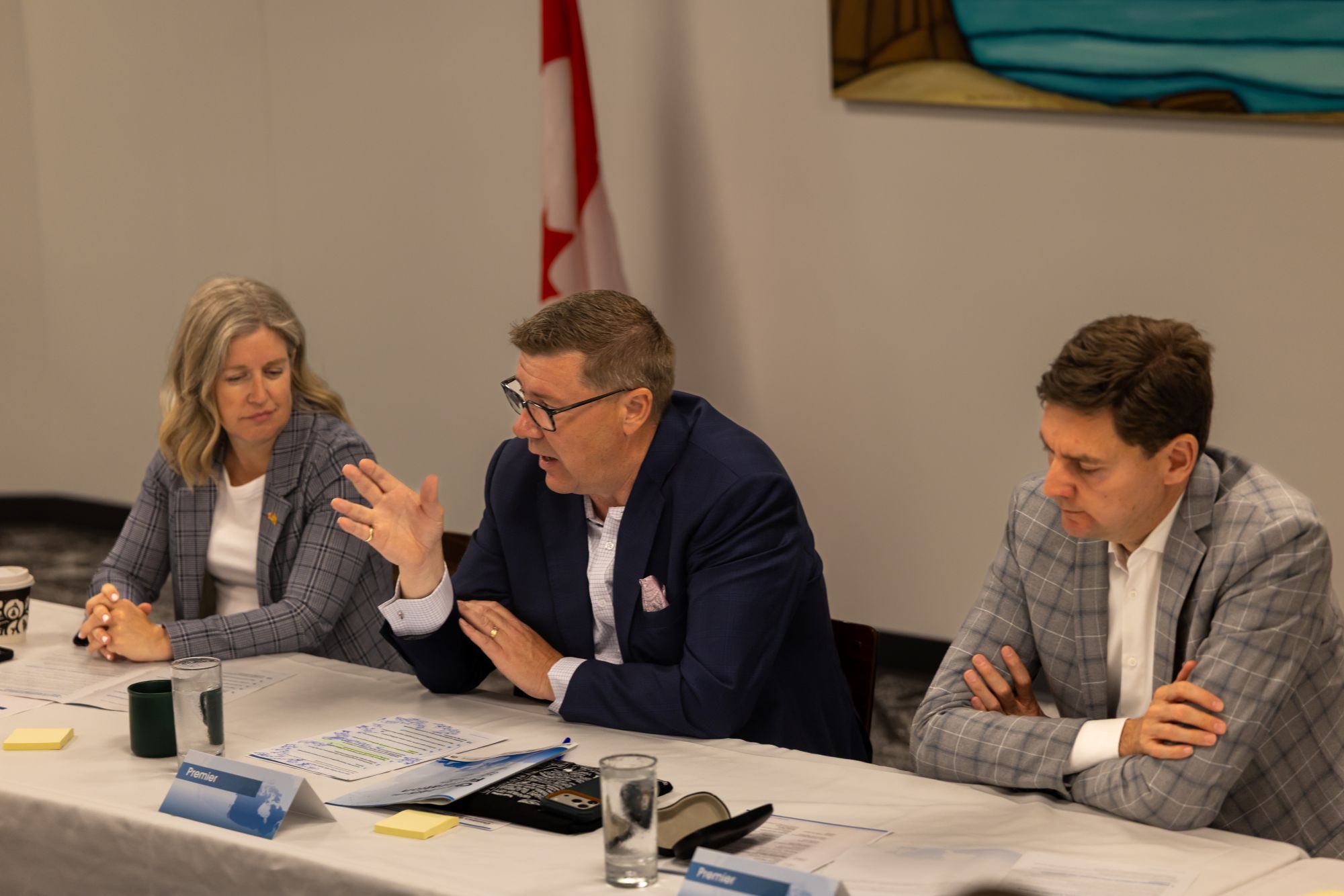
Chambers of commerce and boards of trade are built the same way: provincial and territorial leadership, grounded in local membership, representing business communities across the country. For the second year, my colleagues and I organized around this gathering as the Chambers of the Federation, bringing an agenda for a more competitive Canada and something governments cannot create alone: activation on the ground.
We shared it with the premiers directly. Scheduled sit-downs with three, and the chance to connect with another six over the course of the week. That access reflects what the chamber network represents.
The agenda's five pillars are intertwined, all in service of the same outcome.
- Build one Canadian economy. Time-bound reviews to eliminate interprovincial barriers, mutual recognition by default for goods, services, and credentials, and credential recognition in 30 days or less. A single domestic market, with public progress tracking so everyone can see it happening.
- Compete as Team Canada. A provincial-territorial coordination table for the CUSMA review, one aligned engagement plan with the United States, and risk assessments of the supply chains we cannot afford to lose.
- Build and connect our energy and trade infrastructure. Identify two or three nationally significant energy and trade corridors, advance east-west transmission and grid connection, and align provincial capital plans behind them.
- Accelerate approvals for nation-building projects. Streamlined approvals with clear service standards, provincial impact assessments that serve as the foundation for federal ones, and priority project lists with target timelines, all in partnership with Indigenous nations and communities.
- Strengthen domestic procurement. When Canada buys big, buy Canadian where our trade agreements permit. Weight economic benefit and supply chain resilience in procurement decisions, and publish forward pipelines so Canadian suppliers can plan, scale, and win.
Behind these five pillars sit ten specific actions we have asked governments to advance over the next 12 to 24 months. The full agenda is at www.chambersofthefederation.ca.
And the week delivered. Each of the outcomes below was in the framework we carried into Charlottetown.
- Direct-to-consumer alcohol, signed. On Tuesday, nine provinces signed the final agreement to implement direct-to-consumer sales of alcoholic beverages between their jurisdictions, moving the 2025 memorandum of understanding from commitment to implementation. Our agenda called for moving fast on exactly this.
- Model mutual recognition legislation. First Ministers agreed to work toward an agreement in principle by the end of 2026 to adopt model mutual recognition legislation, creating one Canadian market and supporting labour mobility by drawing on the most beneficial elements of existing provincial and territorial legislation, with the Committee on Internal Trade directed to begin work immediately and report back regularly. For British Columbia this is familiar ground: our province implemented mutual recognition first and is making it permanent, and the search for the best existing legislation now runs directly through that kind of experience.
- Team Canada reaffirmed. First Ministers reaffirmed the Team Canada approach in response to a series of unilateral U.S. trade actions, and the federal government committed to keep engaging provinces and territories so their interests are fully represented in current and future negotiations. They also underscored the value of provincial and territorial trade missions, nearly 140 since March 2025, in opening new markets for Canadian businesses.
- Electricity interties with dated timelines. First Ministers directed their Energy Ministers to work together on implementing electricity interties, with pre-development work complete by July 2027, an initial tranche of projects underway by the end of 2027, and all projects started no later than the end of 2028, with full Indigenous engagement.
We do not claim these outcomes as ours. Governments did this work. What we can say is that business communities across the country asked for these things, we carried that ask into Charlottetown, and the direction First Ministers set matches it. That alignment is the point of showing up.

The role we play in what comes next is the part I find most energizing. Governments can agree, and they can execute. Our network of more than 600 local chambers of commerce and boards of trade, representing 200,000 businesses of every sector and size, is how agreements become activity. Trade missions between provinces. Introductions between businesses that have never sold across a provincial line. A way to report barriers when they show up in the real world.
Let's get to work.
—Jen Riley, President & CEO, BC Chamber of Commerce