Big Ships, Small Businesses: How the Port of Vancouver Connects B.C. to the World
Stand anywhere along Vancouver's waterfront and you'll see the container ships passing through English Bay and multi-storey cranes loading cargo at the port terminals along Burrard Inlet’s south shore. What's harder to see is how far those ships go. Goods can travel from the Port of Vancouver to more than 170 countries, more than 85 per cent of the countries in the world. Yet for many small business owners in B.C., the port is part of the scenery, and few see it as a way to grow their own business. It may be one of the biggest opportunities they haven't explored yet.
The products on a local retailer's shelves, the inputs in a manufacturer's supply chain, the berries headed to customers in Asia: much of what B.C. businesses buy and sell already passes through the port. As more businesses look for new customers and new places to source what they need, the port offers a direct line to markets around the world.
Small businesses account for 98 per cent of the businesses in British Columbia, and many are thinking about trade in new ways. To understand the opportunity, BC Chamber President & CEO Jen Riley sat down with Shaun Govender, Director of Government and External Relations at Vancouver Fraser Port Authority, to talk about what the port does, what moves through it and where B.C. goods can go.
Beyond the scenery: What the port actually does
When people talk about “the port,” they're often talking about two things at once. The Port of Vancouver is the place: 29 major terminals and 1,000+ operators focused on moving goods, an area of more than 16,000 hectares of water and 1,500 hectares of land stretching from Roberts Bank and the Fraser River to Burrard Inlet. It borders 16 municipalities and intersects the traditional territories of more than 35 Coast Salish First Nations.
The Vancouver Fraser Port Authority is the arm's-length federal agency responsible for enabling trade through the port as well as the stewardship of those lands and waters. Think of it as a landlord and steward. The port authority doesn't move cargo itself. It leases land to the terminal operators and supply chain partners who do, approves projects on port lands, and leads the infrastructure projects that help trade grow.
Independent operators run 29 major terminals at the port across five sectors: automobiles, breakbulk, bulk, containers and cruise. Each sector needs its own kind of terminal and its own kind of ship. Breakbulk, for example, covers large items that don't fit in a container, like steel beams, tractors and lumber.
The port's reach also extends well beyond the waterfront. More than 230 off-dock hubs and on-dock rail service from CN and CPKC connect it to road and rail networks across Western Canada and North America. A small manufacturer in Prince George or a food producer in Kelowna can rely on the port as much as a business in port-adjacent cities like Vancouver and Delta.
In 2025, a record 170.4 million metric tonnes of cargo moved through the Port of Vancouver, or about $1 billion in trade every day. That's more cargo than Canada's next five largest ports combined. Across a year, it adds up to roughly $365 billion in trade, supporting more than 130,000 jobs across Canada, including more than 100,000 in B.C. Behind those numbers are tens of thousands of Canadian businesses that rely on the port to reach their customers and suppliers.
“The Port of Vancouver is Canada’s largest and most diverse port. It plays an outsized role moving what Canadians and B.C. businesses make, mine and harvest to customers around the world. This includes moving more than $125 billion worth of B.C. goods last year, as everything from exports of forestry, food and energy products to imports of consumer goods and vehicles passed through port terminals and enabled local businesses to compete in world markets and power the local economy.”
—Shaun Govender, Director, Government and External Relations, Vancouver Fraser Port Authority
Moving what Canadians make, mine, harvest and grow
The port's tagline captures its reach: it moves what Canadians make, mine, harvest and grow. That includes metallurgical coal, critical minerals and forest products from B.C., petroleum products and grain from Alberta, wheat, canola and potash from Saskatchewan, and machinery, building materials and consumer goods from Ontario and Quebec.
Trade through the port runs in both directions. Many of the everyday goods British Columbians buy, and many of the inputs B.C. businesses rely on, arrive through Vancouver. For a small business, that might be the packaging, equipment or ingredients it needs to keep operating.
On the way out, it's not only grain and coal. B.C. seafood and shellfish, berries and fruit, apparel and textiles, manufacturing parts, lumber, and dairy and animal products all ship to customers overseas. Fresh fruit travels in refrigerated containers that are monitored and temperature-controlled all the way to market. Vancouver is also a coffee roasting hub. Beans grown in South America arrive here, get roasted, and are shipped on to the rest of the world.
It's easy to assume the port is only for large companies with large shipments. In practice, almost anything that fits in a container can move through it. Small businesses that aren't filling containers on their own typically work with intermediaries, like freight forwarders, who handle the steps between a business and the terminal.
"Many people are surprised by the variety of goods that move through the Port of Vancouver. The port’s four container terminals, and multiple breakbulk and bulk terminals allow it to handle almost any cargo big or small - from SeaBuses arriving at our Lynterm breakbulk facility to cow hides and wild-foraged specialty mushrooms being delivered to overseas customers in secure containers. If your business makes it or needs it, we know one of our terminals can move it.”
—Shaun Govender, Director, Government and External Relations, Vancouver Fraser Port Authority
Where B.C. businesses can trade
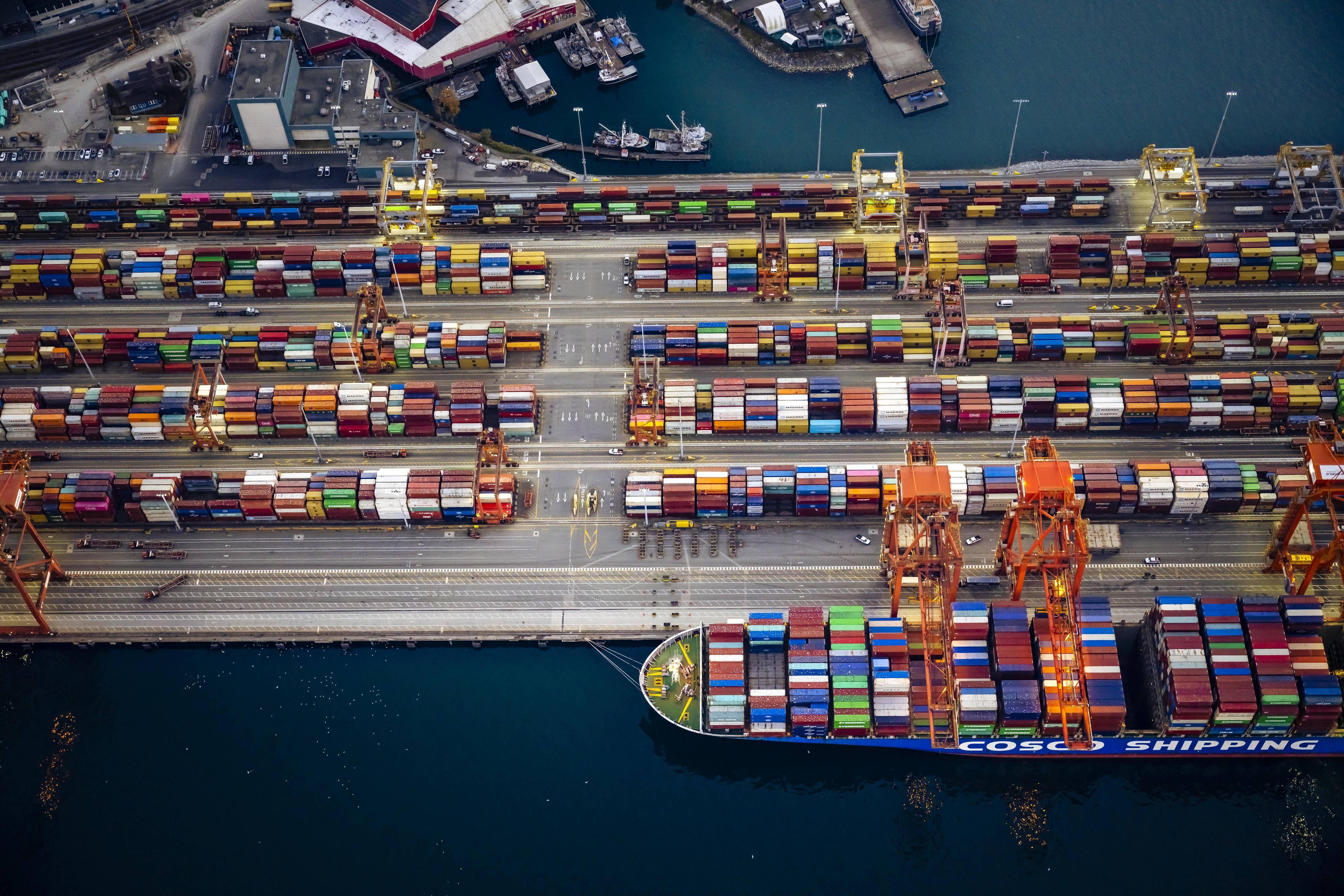
With more than 170 countries within reach, B.C. businesses looking for new customers or new suppliers have plenty of options.
Canada's free trade agreements provide preferential access to markets around the world, helping Canadian businesses expand their reach and take advantage of new international trade opportunities. For a small business testing a new market, that can make the first step easier. The port’s biggest markets today are China, Japan and Korea. China and India are also major trading partners, even without free trade agreements, and Canada is actively working toward an agreement with India.
Canada's reputation helps, too. Canadian products are known for their quality, and as the global landscape shifts, many countries are looking to buy from trusted partners. That reputation travels with every Canadian product, whether it comes from a major exporter or a family business on Vancouver Island. For B.C. businesses, the growth across the Indo-Pacific region is a real opportunity.
Diversification also works in both directions. New markets can be a source of customers, but also of the raw materials and manufactured inputs that businesses need to keep producing. For a small manufacturer, a new supplier can be as valuable as a new customer.
“The Port of Vancouver is ready to help B.C. businesses grow by unlocking new markets and opportunities, in support of federal work to grow Canadian exports beyond the U.S. With B.C. sitting across the water from a booming Indo-Pacific region on track to represent half the global economy by 2040, the opportunity is enormous. That is why we are investing in port and supply chain capacity - including Roberts Bank Terminal 2 - to ensure local businesses can continue to compete in global markets, generate local jobs and help Canada to thrive.”
—Shaun Govender, Director, Government and External Relations, Vancouver Fraser Port Authority
Building for what comes next
The port authority expects demand for trade with markets outside the U.S. to keep growing, and part of planning for that is the federal government’s Port of Vancouver Gateway Strategy. The strategy has four parts: unlocking new bulk capacity, expanding container capacity, strengthening rail connections, and growing responsibly through environmental protection and stewardship.
At the centre of that work is Roberts Bank Terminal 2, a new container terminal in Delta. Once built, it's expected to add $100 billion in Canadian trade capacity every year and increase container capacity on Canada's West Coast by 30 per cent. The project has mutual benefits agreements with 27 First Nations, and construction is targeted to begin in 2028. That added capacity benefits every business that relies on the port, including the many small businesses that will never set foot on the waterfront.
"Roberts Bank Terminal 2 will be game-changing, unlocking $100 billion in trade capacity and increasing container capacity on Canada's west coast by 30%. The new Delta container terminal will help reliably connect Canadians with their overseas partners, supporting the two-way container trade that so many B.C. businesses rely on to stock their shelves and sell to overseas customers.”-
—Shaun Govender, Director, Government and External Relations, Vancouver Fraser Port Authority
This is also why transportation corridors are one of the BC Chamber’s five priorities for small business. Like all of the BC Chamber's policy positions, it started with local chambers and boards of trade raising the issues their members face. The network recommends a provincial corridor strategy that recognizes northern corridors and secondary routes as economic infrastructure, along with sustained investment in port supply chains. A port is only as strong as the roads and rail lines that feed it, and small businesses across the province depend on both.
Where small businesses can start
The opportunity for small businesses is bigger than many realize. Trade agreements are opening doors, the port is building capacity for growth, and Canadian products carry a reputation buyers around the world trust. Exploring that opportunity doesn't start at the waterfront, though. The port authority builds the capacity that makes trade possible, and other organizations help businesses find new customers or suppliers and get products ready to ship.
Export Navigator offers free one-on-one support from export advisors across the province. Trade and Invest BC helps businesses explore international markets. And your local chamber of commerce or board of trade can connect you with resources and people in your community.
The ships in the harbour aren't just for big business. For B.C.'s small businesses, they're a way to reach customers and suppliers they haven't met yet, in markets they may never have considered. It's worth a closer look.
Get involved
- Connect with an Export Navigator advisor
- Explore international markets with Trade and Invest BC
- Read the BC Chamber's five priorities for small business
- Subscribe to the BC Chamber newsletter